
Snow blankets Pernik, a mountain town in western Bulgaria, just twenty kilometres away from the capital city, Sofia. There is nothing towering over the white winter cover except the enormous chimneys of an old coal power plant. This smoking colossus belongs to the remnants of what was once a model industrial city during communism. Pernik remains an important center for heavy industry and coal mining, although the collapse of the Iron Curtain marked its gradual decline. In recent years, it has earned the unfortunate title of the most polluted city in the European Union, according to the European Environment Agency (though Pernik still ranks poorly, it is now in Slavonski Brod, Croatia, where the air quality is even worse).
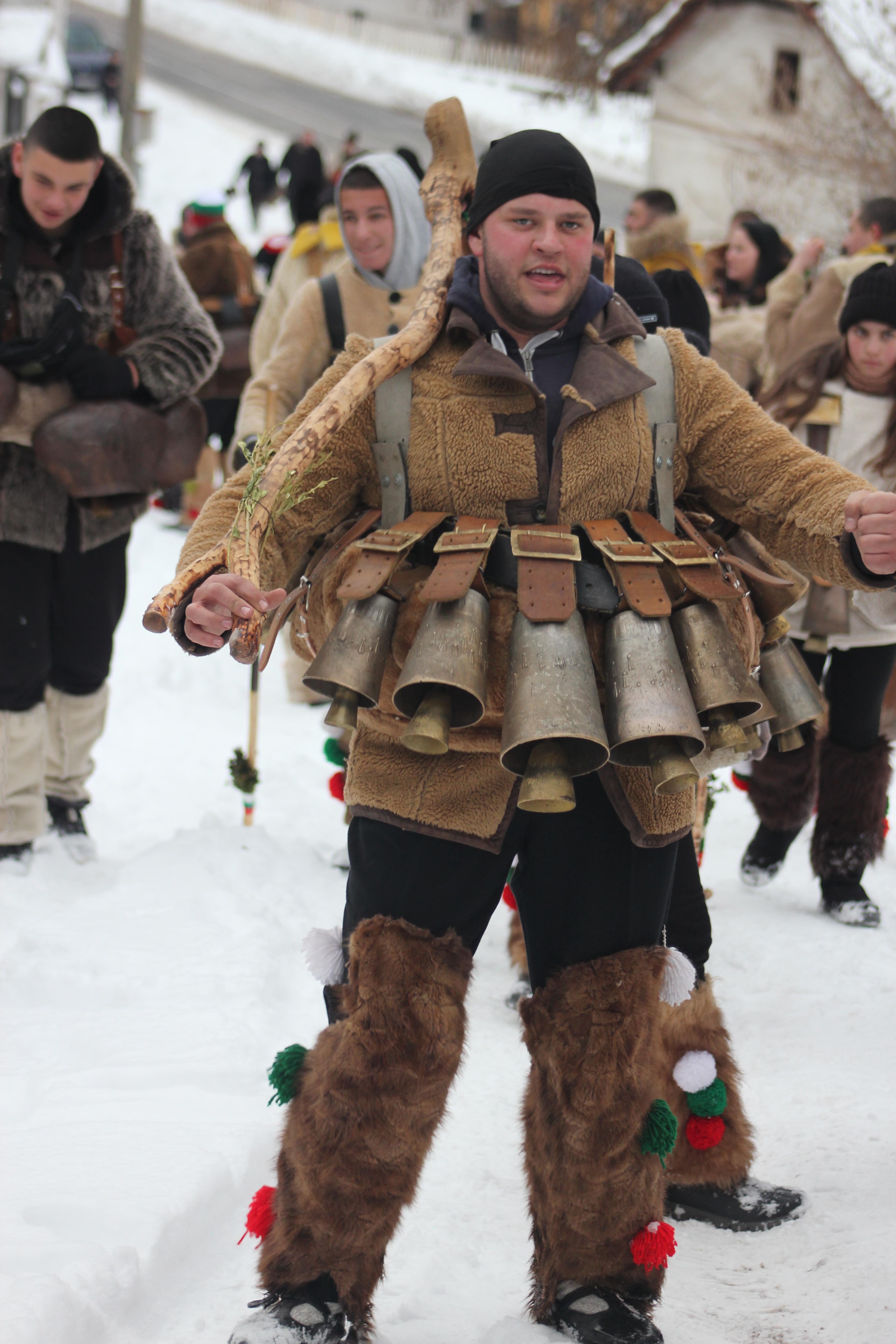
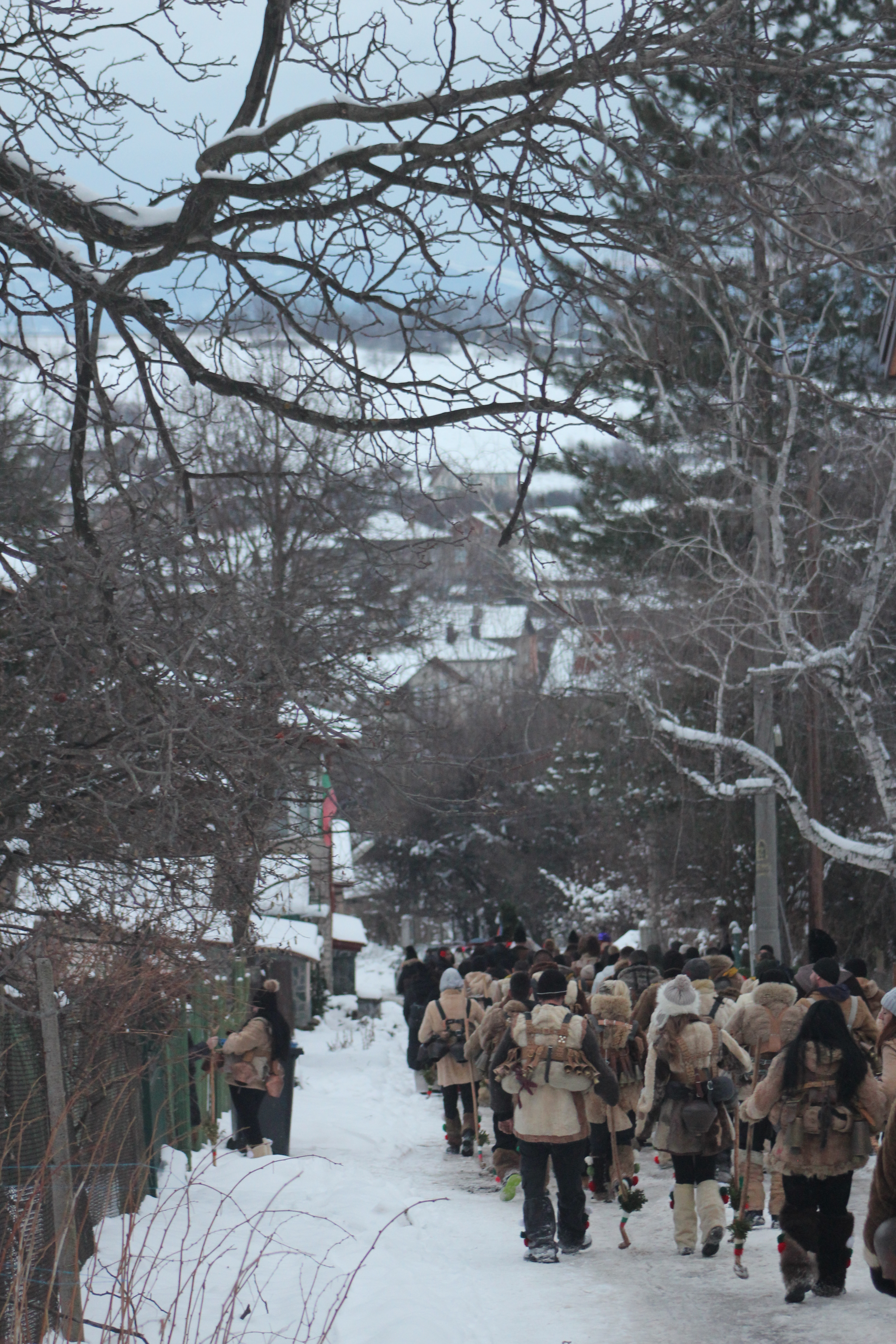
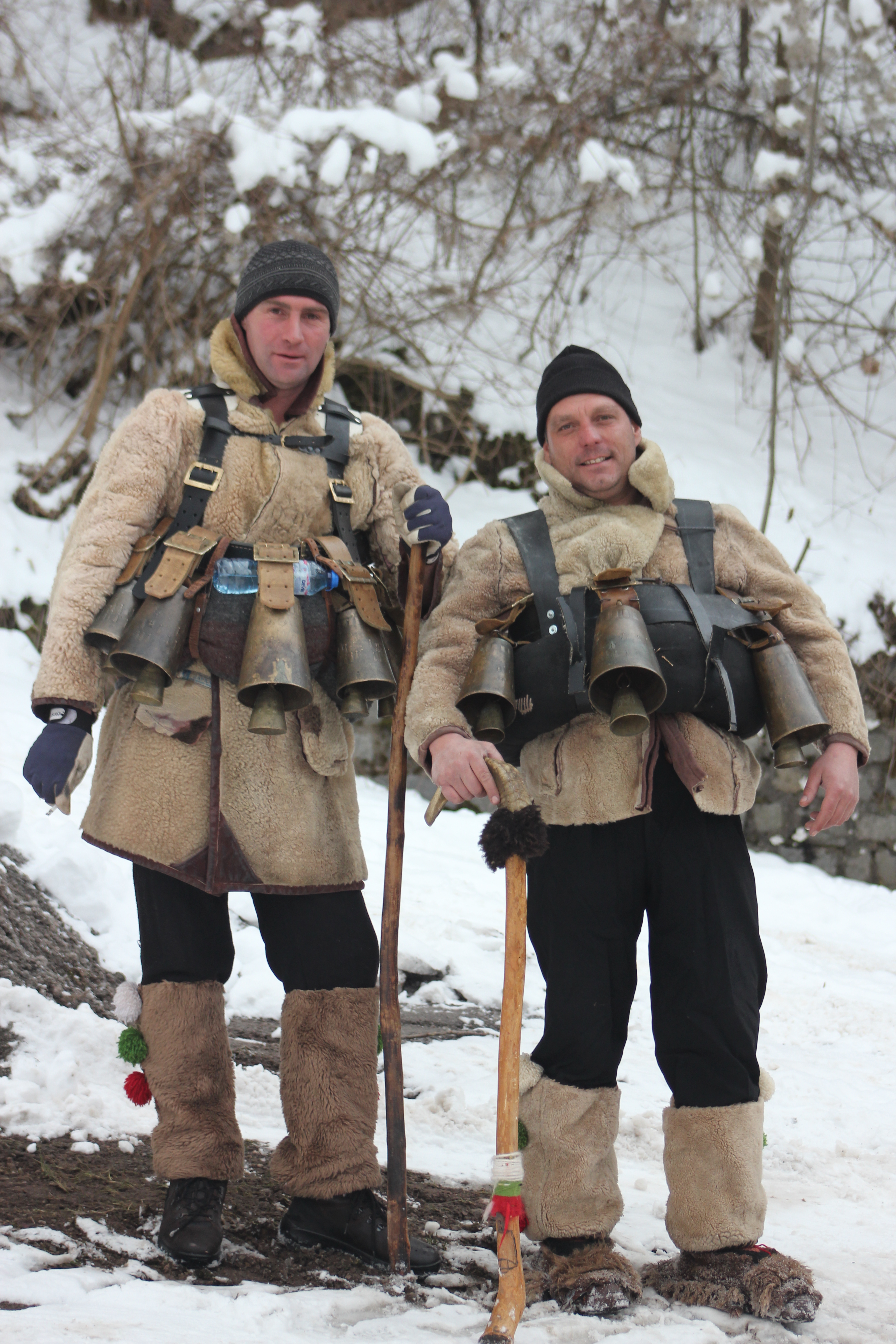
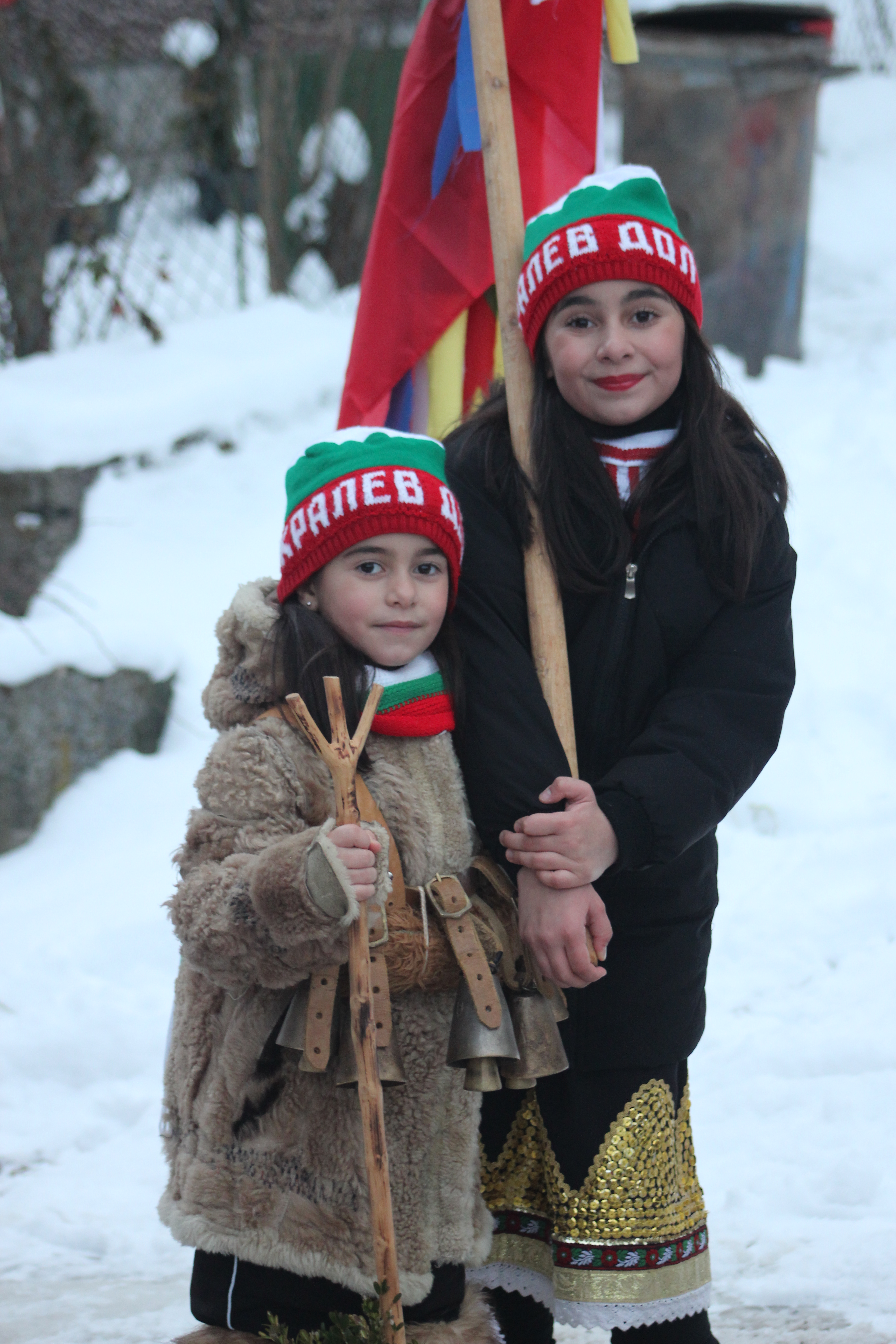
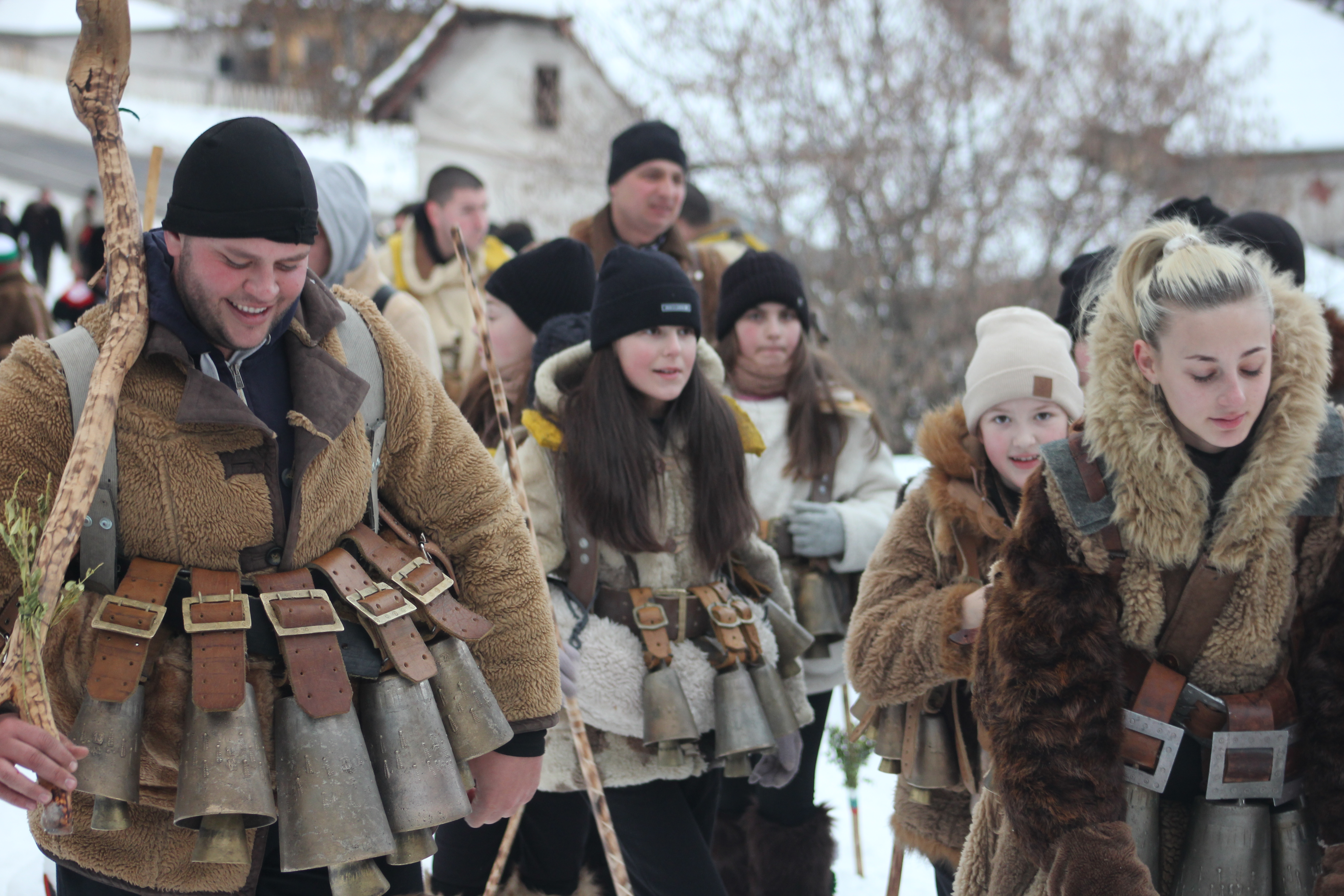
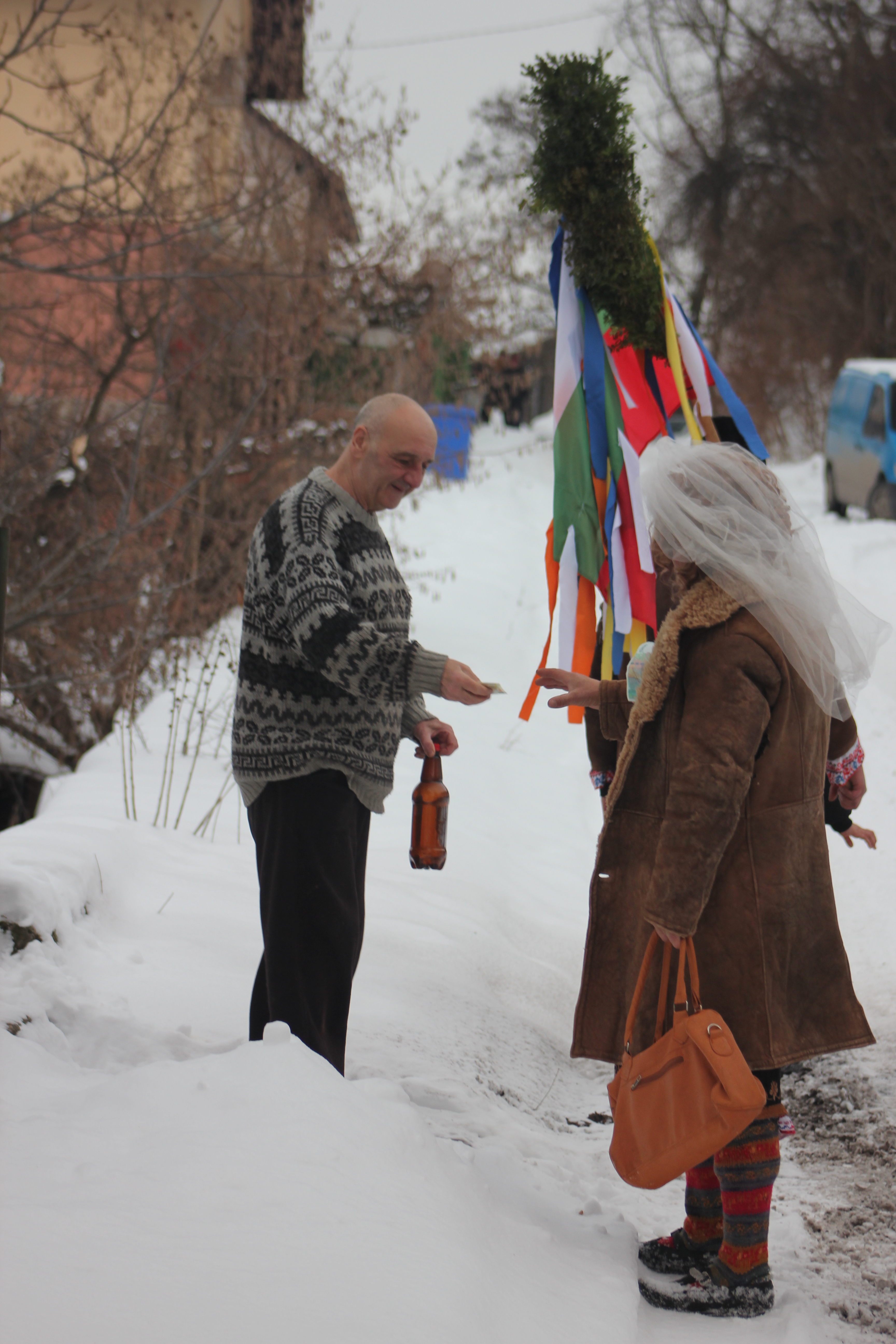
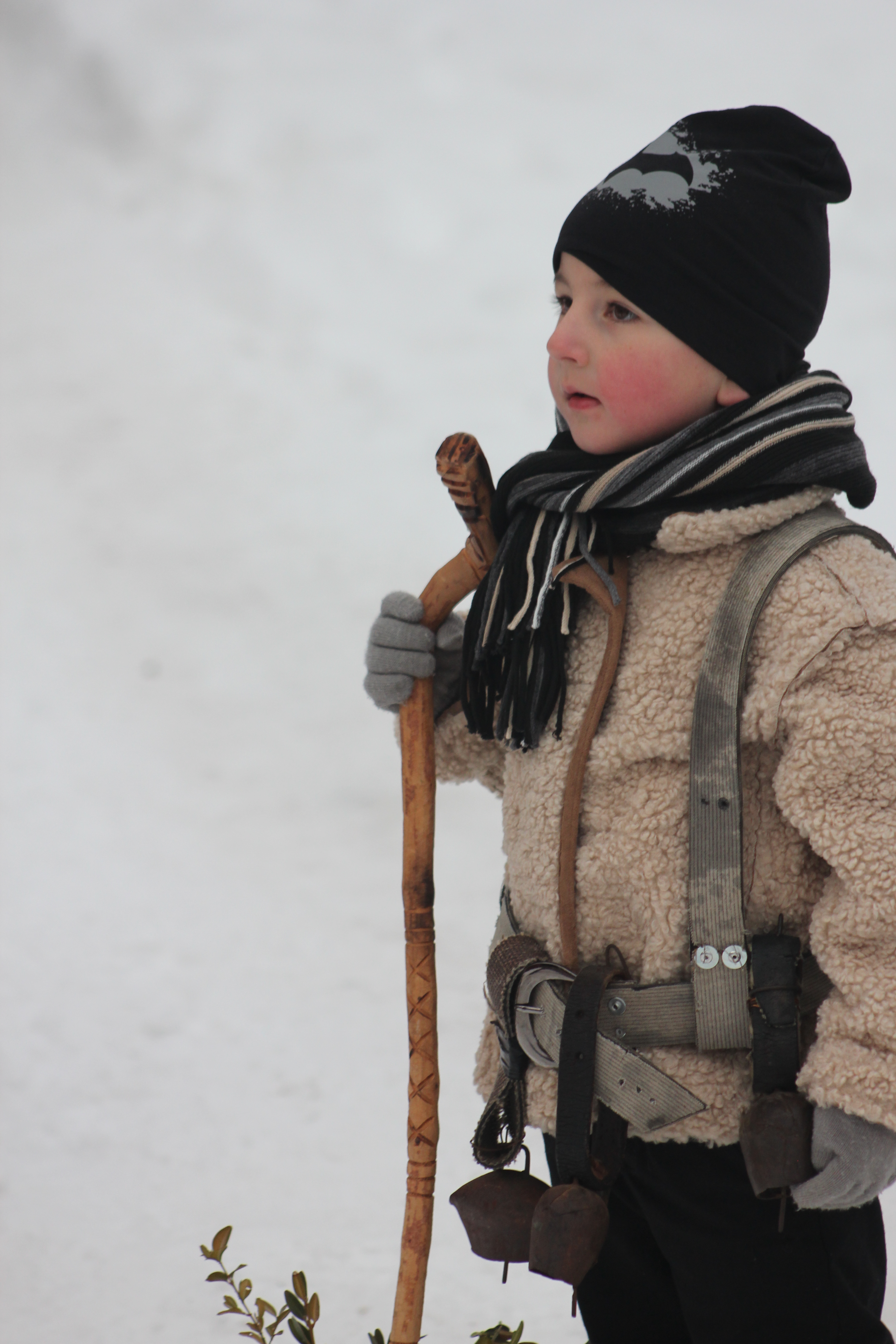
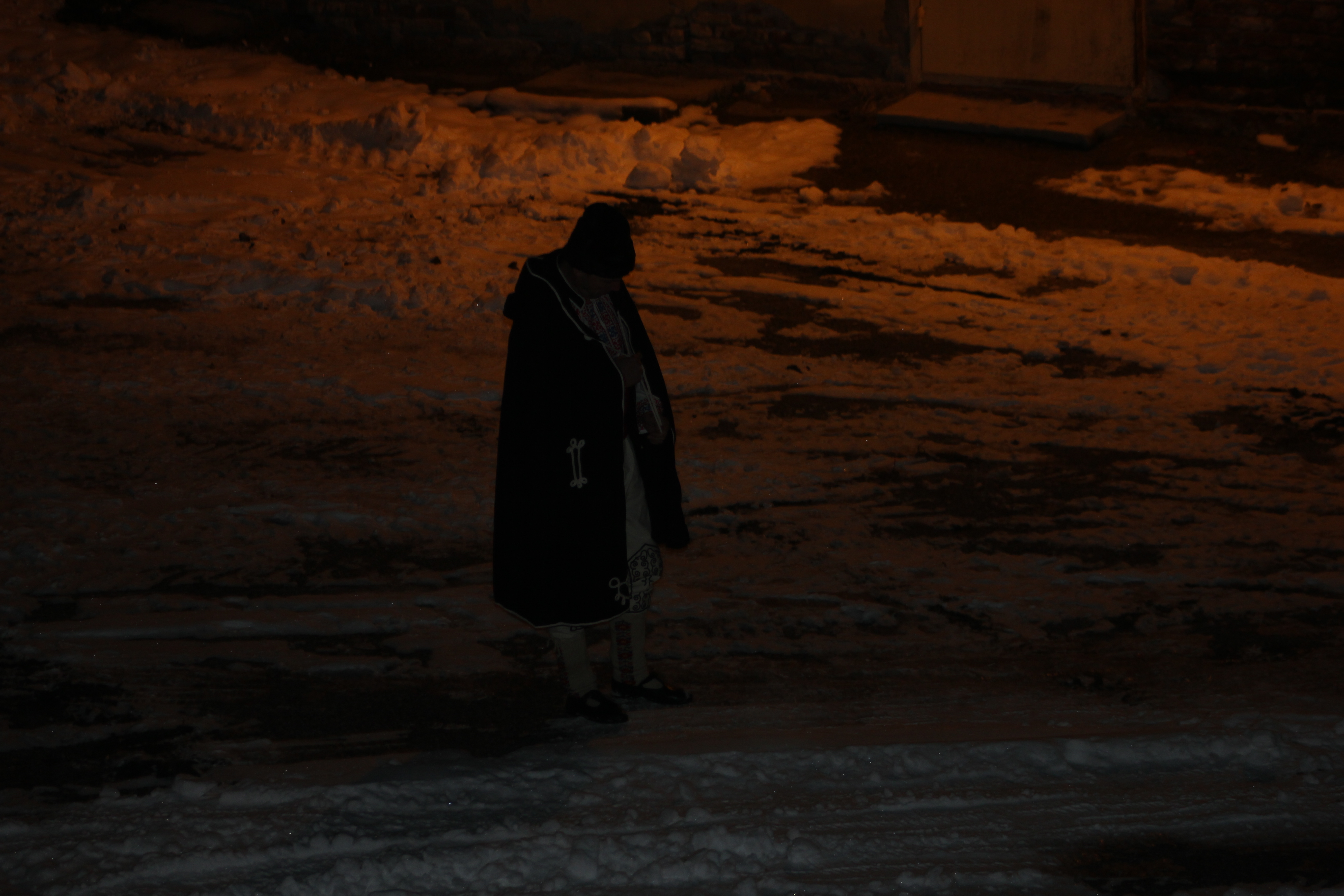
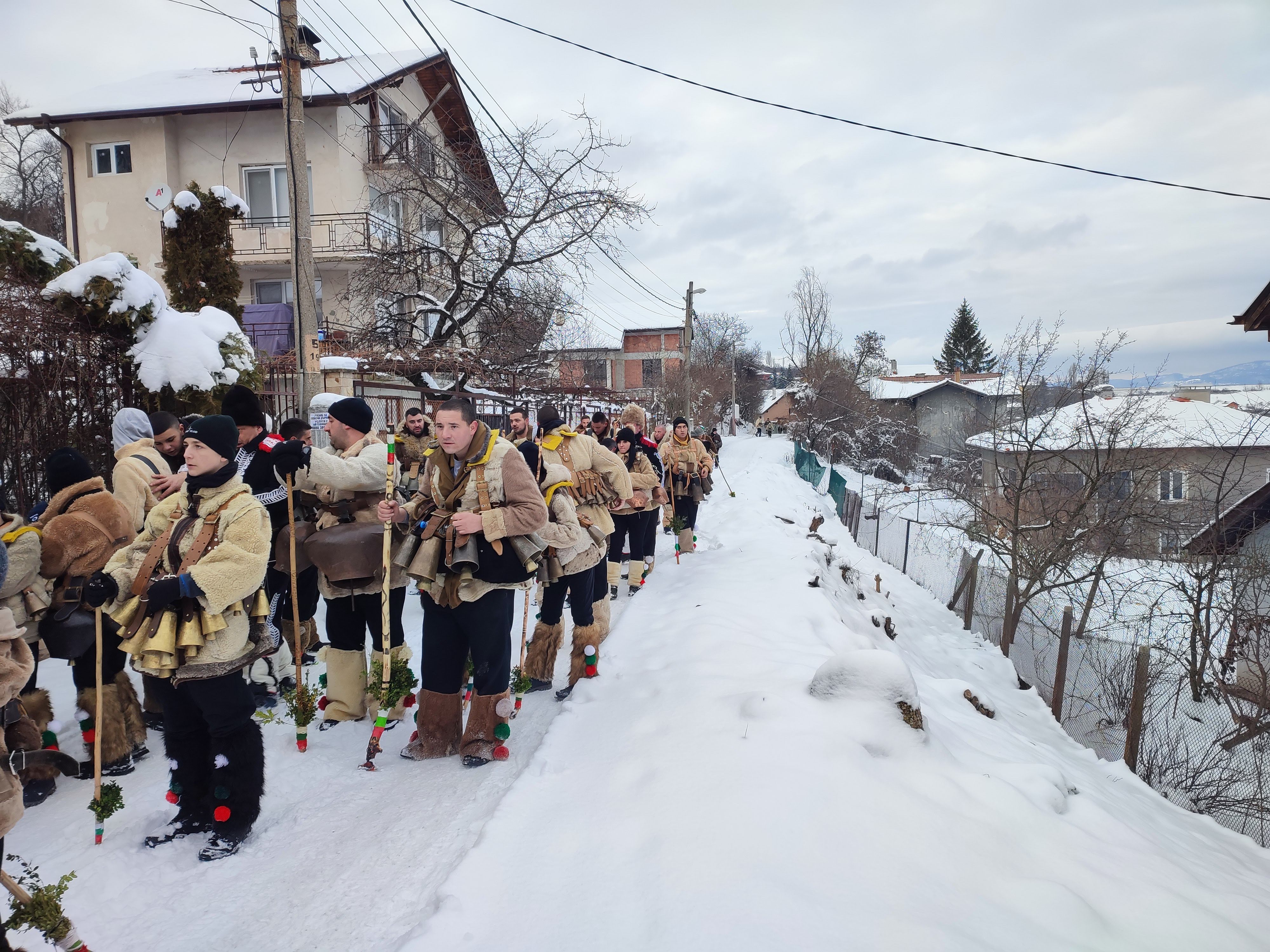
The gray apartment blocks, built in the 1950s for the mine and factory workers of the then-called Dimitrovo (after Bulgarian Communist leader Georgi Dimitrov), line the curved road to the south towards the hills. As the bus winds and turns, the run-down factories give way to woods, and the brutalist architecture transforms into picturesque tiled houses with snow-covered gardens. The bus arrives empty in Kralev Dol, a village nestled at the foot of the Golo Burdo mountain. The stillness is broken as doors swing open. Hundreds of tiny bells ring out, as if a herd of cows had synchronized their chimes. The tinkling comes from the top of a hill, where a group of about fifty men, women, and children dressed in fur coats bounce in unison, each carrying dozens of bells and cowbells tied to their waists. They are led by a priest, a couple of newlyweds, the wedding kin, a bear and a bear keeper, a police officer, and a procession of musicians. The masquerade group visits house after house, offering blessings for health, fertility, and prosperity. In return, they receive traditional food, money, gifts, and warming sips of rakia, a popular Balkan fruit brandy. The music becomes livelier with each stop, and the visits extend longer than expected, especially where generosity reigns. The snow doesn’t deter them from venturing to the most remote houses in the village. All the villagers eagerly await the arrival of the Survakari —traditional masquerade groups that welcome with pagan rituals the folk New Year (St Basil’s day according to the old Julian church calendar).
«The Survakars from the Pernik region have the confidence that they are the bearers of an ancient tradition. The inclusion of the Surova folk feast on UNESCO’s Representative List of Intangible Cultural Heritage has strengthened the sense of this significance and the role that local communities play in preserving this custom in modern times. The participants understand the importance of safeguarding the masquerade tradition for future generations. The inscription has also raised the visibility of this practice and helped to popularize it beyond Bulgaria’s borders,» explains Milena Lyubenova, a key figure at the NGO LOCAL HERITAGE, which actively works to preserve intangible cultural heritage in the Pernik region.
In the past, only young unmarried men participated in the Surova, as the custom had initiation rites linked to their future marriages. Today, however, the entire village joins in the celebration to ward off evil and invite good fortune. In Kralev Dol, women, children, and youth all partake in the rhythmic dancing and in making the giant copper bells resonate across the valley. «The inclusion of young people in the custom is a natural process that takes place within families and the village community. There are Survakar groups in which members from three generations of the same family participate. Children and young people enthusiastically work alongside their parents and grandparents to create their masks and costumes,» says Lyubenova.
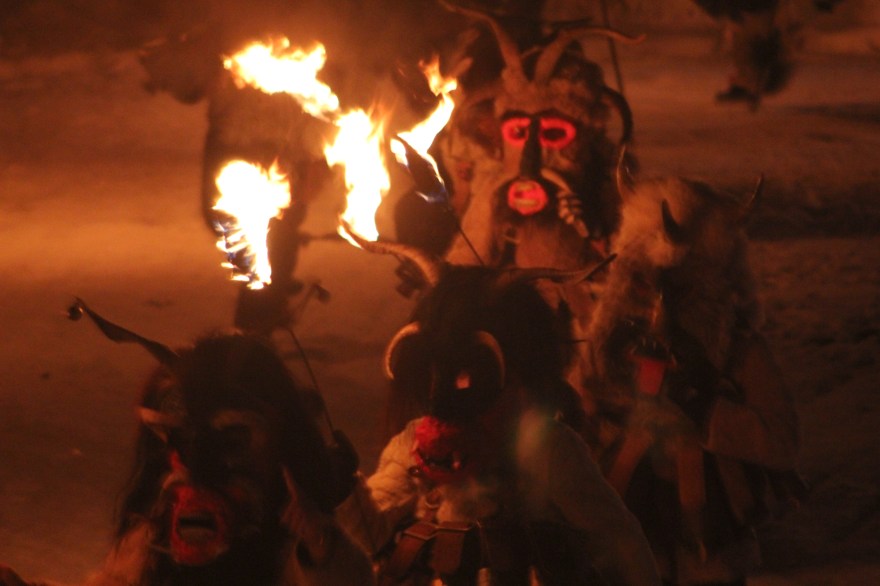
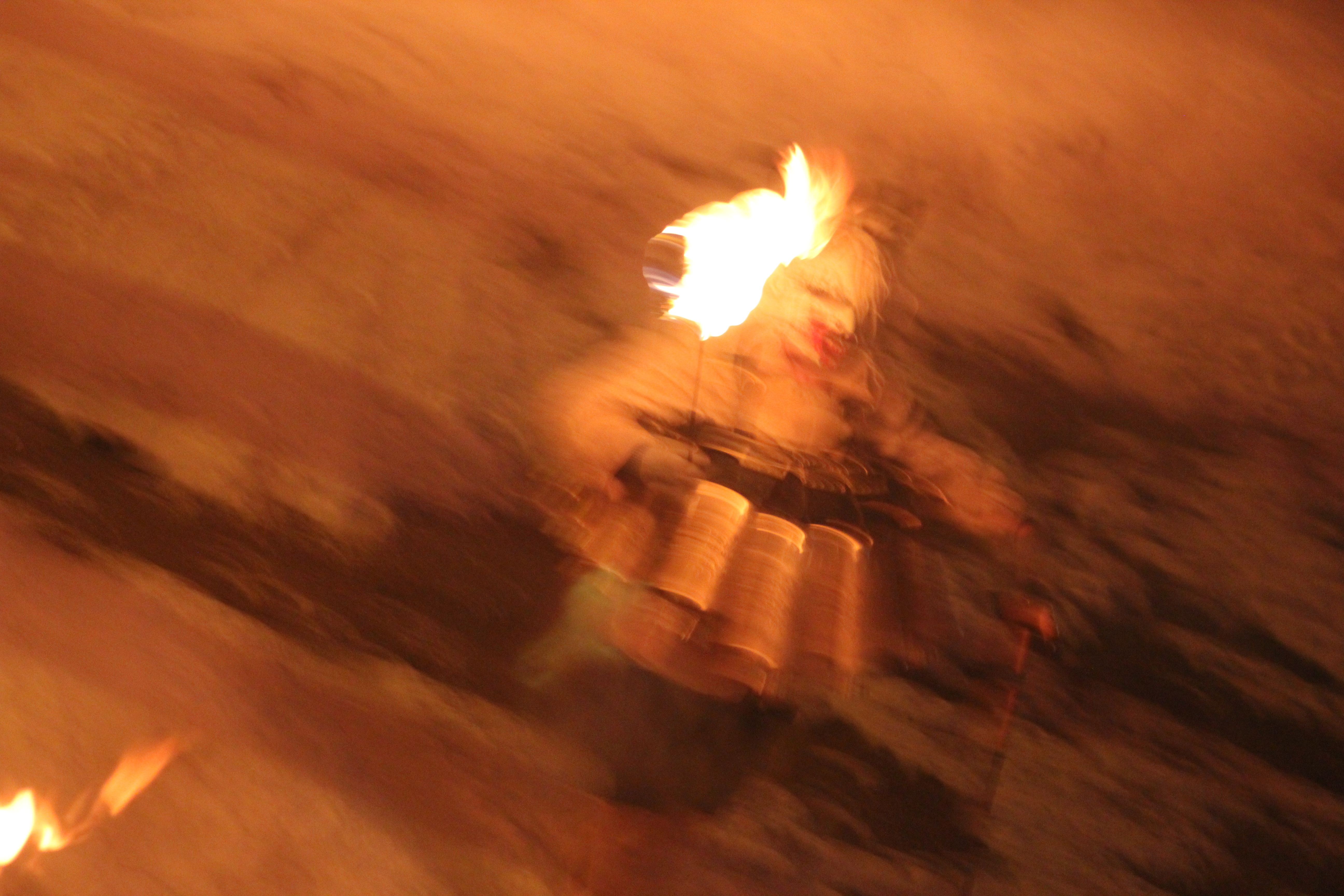
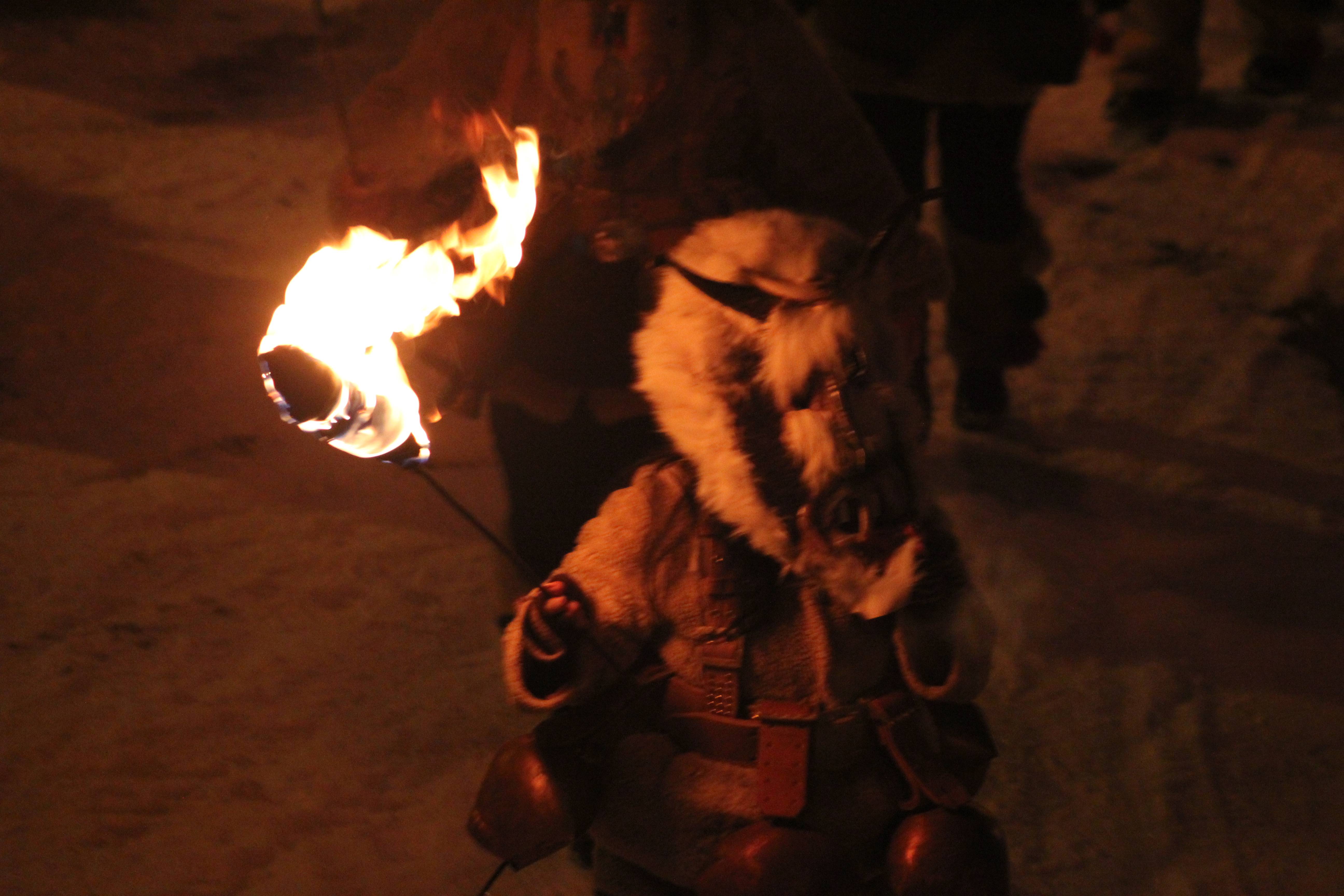
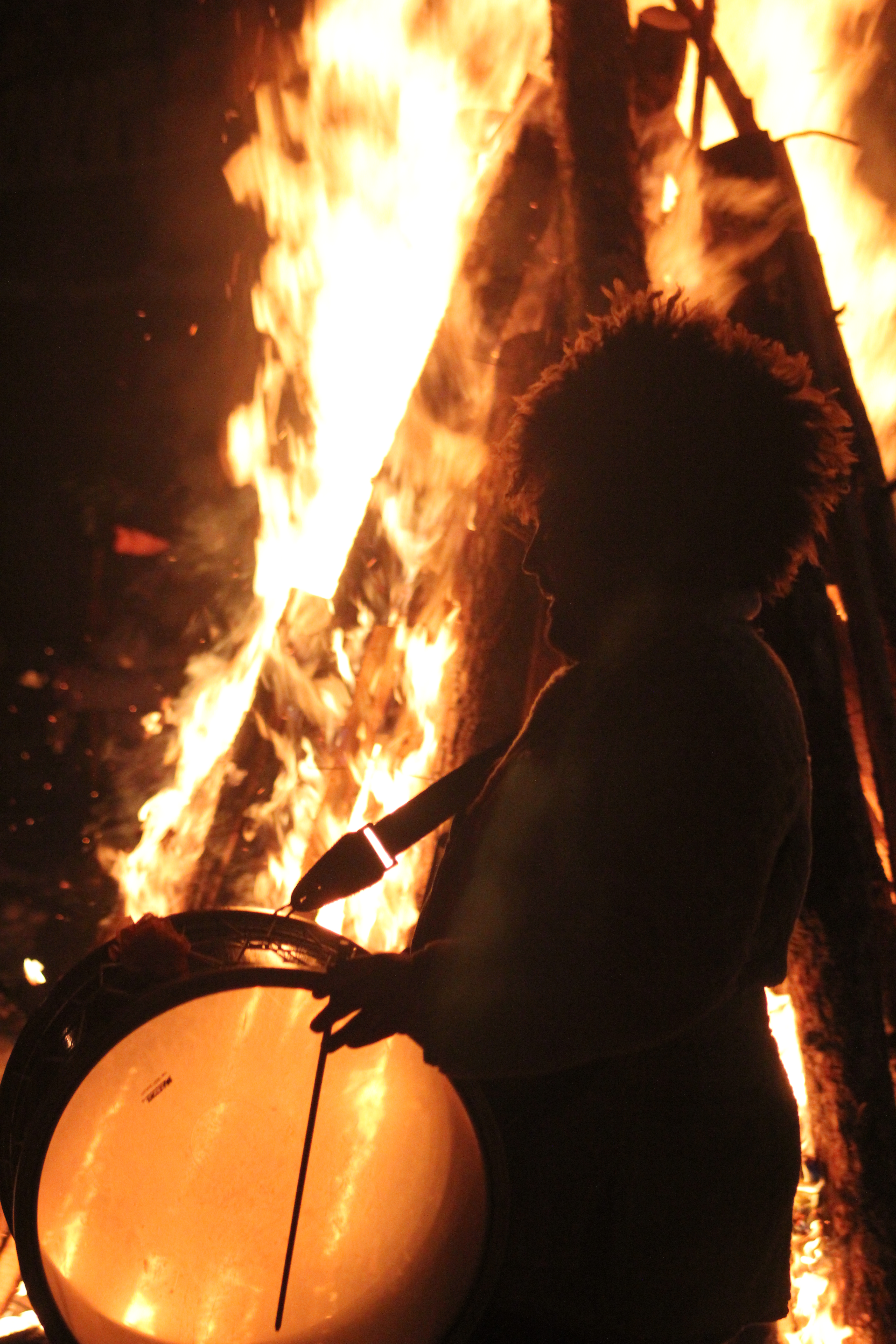
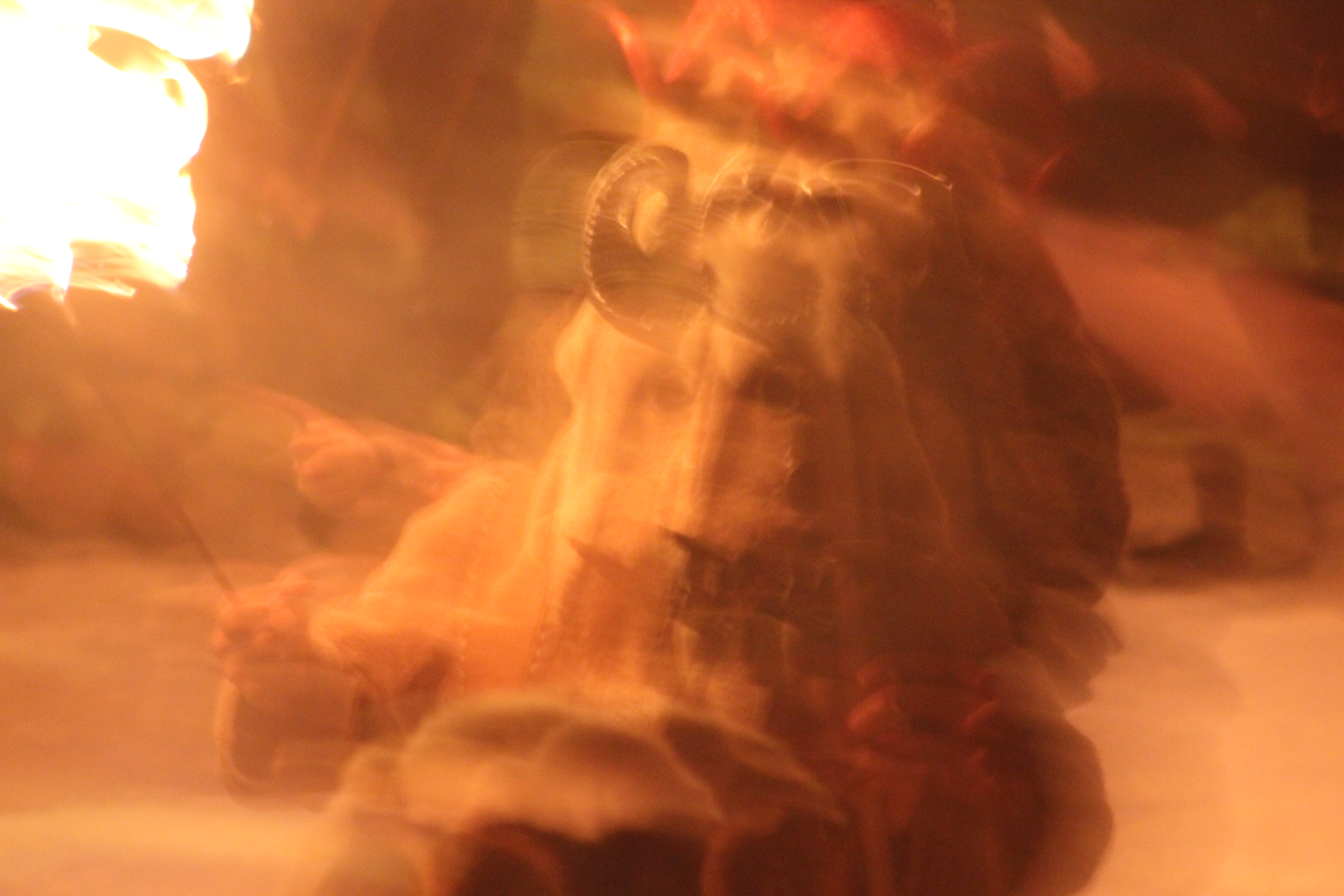
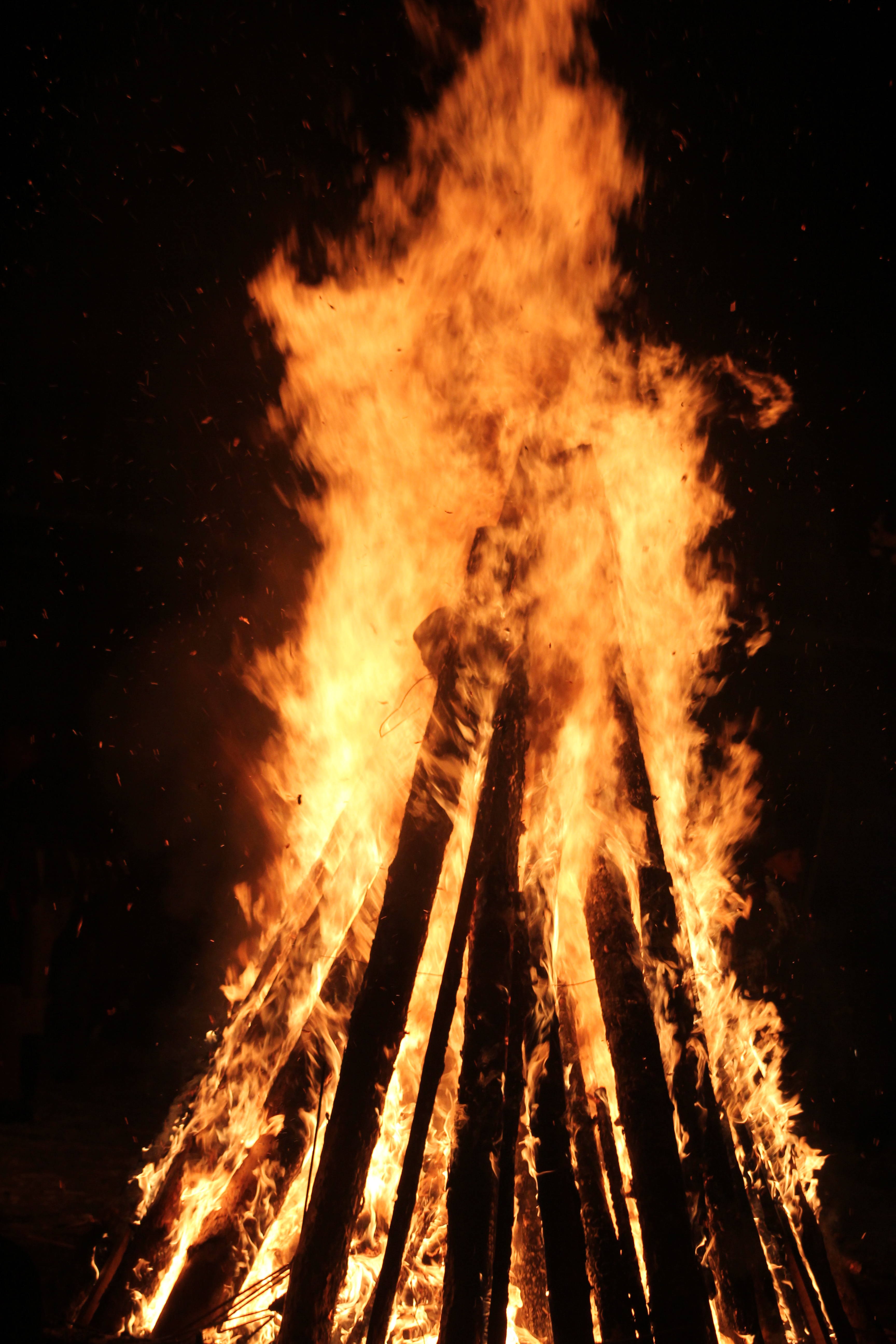
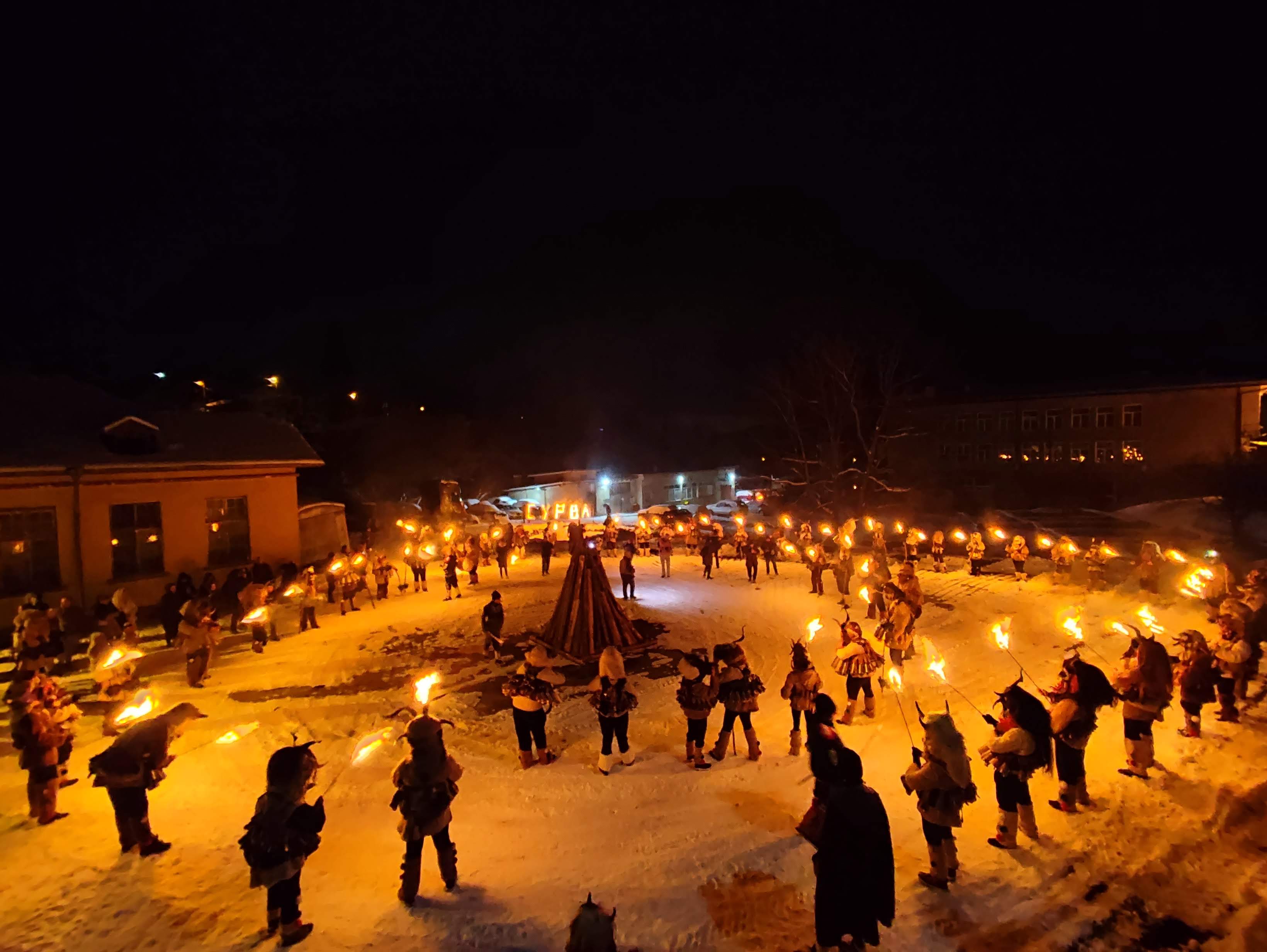
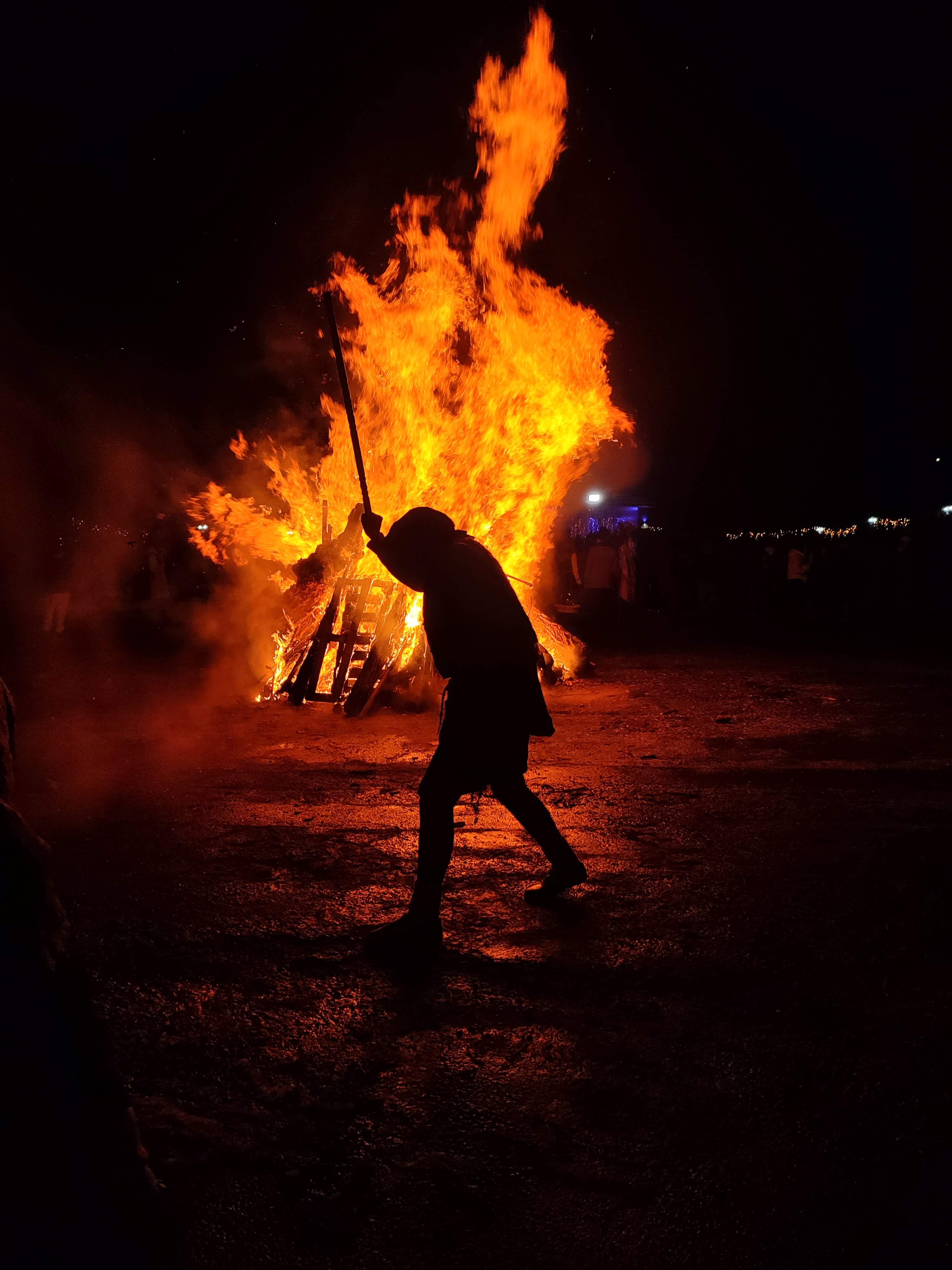
The masks arrive just as twilight sets in. A rusty old van pulls up in front of the monument to local partisan hero Nicolas Chuchulkov, where the Survakari gather while the lively Balkan brass fanfare plays in the background. Their uncovered faces are soon hidden behind haunting animal-like masks (lik) made of wood, stuffed animal parts, leather, horns, wings, and feathers. These unique handcrafted creations represent various mythical creatures and animals, such as goats, bears, and demons. Their terrifying presence marks a symbolic transition from the old year to the new. Each masked participant, clad in skins of wild and domestic animals, marches in a line, defying the encroaching darkness to ensure that the sun does not catch them on their path. They carry massive torches of fire. The snow-covered village square resembles a vast mirror reflecting the flickering lights of the dozens of nocturnal creatures. The Kukeri form a magical circle around a pile of wood that will soon become a bonfire. Their leaps grow faster, increasing the rhythm of the bells. The hypnotic noise never ceases, the torches merge, and the fire becomes colossal. The dreamlike creatures dance around the great flame in a kind of collective trance to drive away malevolent spirits, their movements deeply rooted in tradition—until at last, the fire dies down, leaving only glowing embers and otherworldly footprints in the snow.
The villagers of Kralev Dol can rest easy, for the Survakari bring a good harvest, health, and happiness to the community for the entire year. Lyubenova is also pleased: «Masquerade games have ancient roots, but they are still very much alive today. The Surva tradition remains vibrant, passed down through generations, ensuring its continuation in the future.»


 slowphotojournalism.org